
I have gotten some really great questions about our low waste, low budget, healthy approach to grocery shopping, so here’s a post dedicated to answering some of your questions! I’m going to lay it all out there, be honest about our numbers, and share how we make our low income stretch to fit our values.
How Much Do You Spend On Food?
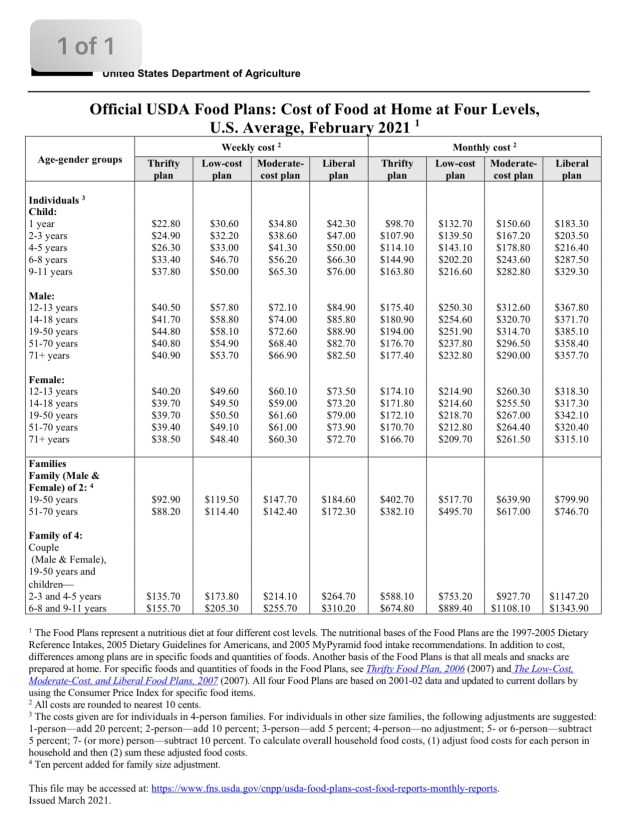
We budget $588/month or $135 a week for our family of four (female adult, male adult, five year old, three year old). This is the lowest of the four spending categories called “thrifty” listed by the USDA. Take a look at the chart below if you’re interested to see where your grocery spending falls. There have been times when we’ve only been able to spend $100/week and I’ll share how we did that too!
For us, this number also includes any eating out we do (about once a month we may get take out, or coffee and a treat as a family).
How Can A Low Budget Allow for Organic and Low Waste Groceries?

- Misfits Market!
In a perfect world, we’d buy only from local farmers but we don’t have the budget to allow for exclusively local food, so we choose the best options we can. It’d also be pretty cool to grow our own food – maybe we’ll get there someday! At four months into our homesteading journey, we have harvested a total of four leeks and are raising five hens. We have a bunch of enthusiasm and a lot to learn.
Enter: Misfits Market! An amazing company helping lower food waste in America and making organic produce available at up to 40% off grocery store prices. They have two boxes ($22 or $35) which you can have delivered every week or every other week. The $35 plan is more than enough for our family’s produce needs (we have to really try to use it all up and sometimes freeze some for later). You get to choose from their produce stock every week, so you have a say in what’s in your box! They have a great pantry section too with hugely discounted items. We love their peanut butter, jam & mayo in glass jars. A $7 jar of organic peanut butter for $2.99? Yes please! My husband really enjoys chips, so every once in a while we choose to get those from Misfits because they were likely headed to the landfill anyways.
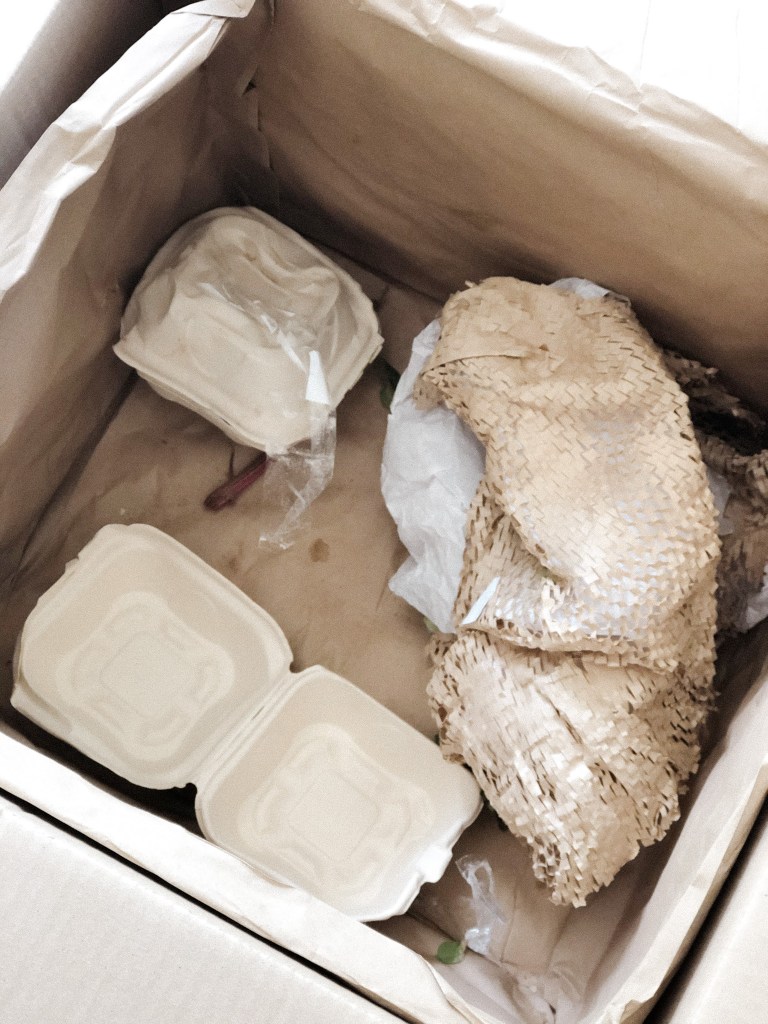
They use as little plastic packaging as possible, most of it being paper and compostable or recyclable.
Why care about lowering food waste?
There are a few reasons. First, you’re helping the earth in a very powerful way. Global food waste generates 3.3 billion tons of carbon dioxide annually, making it one of the single biggest contributors to planet-harming emissions. Saving this produce can actually help save the world. Second, you can save big on your grocery bill. Misfits Market produce is up to 40% cheaper than grocery store prices, so the weekly savings add up fast. Third, you’re supporting responsible agriculture. By purchasing food that would otherwise go to waste, you’re letting organic farmers generate extra income. (Misfits Market, About Us)
If Misfits isn’t in your budget or geographic area, I would suggest avoiding the dirty dozen and going conventional and unpackaged on the rest of your produce. - Buy Unprocessed/ Food In It’s Original Form
When you buy all unprocessed ingredients, the price per pound is usually lower. The added benefit is knowing you’re not eating things with additives. Rice, dry beans, oats, produce, cans of tomatoes, popping corn, nuts and seeds, minimally processed meat, milk, eggs, flour, etc.
We also save on meat by buying one organic whole chicken a week which provides enough meat for two meals (one lb per meal) and a huge batch of bone broth to flavor our vegetarian meals. - Buy Unpackaged And/Or Plastic Free
Dry beans, rice, popcorn, seeds, raisins, oats, etc. are loads cheaper than buying canned beans, flavored rice boxes, already popped popcorn, chips, granola, dry cereal, trail mix and snack bars. We take a little extra time to cook these ingredients ourselves and have come to really enjoy our family time together in the kitchen. Buying these pantry items from a bulk section + using our cloth bags also helps cut down on trash.
The one exception to the rule is nuts. I don’t know why this is the case, but bulk nuts are a bit more expensive than nut butter in a jar or prepackaged nuts. Although I would love to cut out the glass jar entirely and blend our own, we purchase peanut butter because it is less expensive. And we eat *a lot* of peanut butter with snacks and what not.
What About That $100/week budget?
So in times where our family has needed to only spend $100 on groceries things looked a little different, but we were still able to make some strides towards less waste. Here’s how we cut expenses while still eating as healthy as possible:
- Conventional meat
- Beans and rice in plastic for 99 cents/lb
- Buy the largest plastic container possible (multiple small containers make more waste per pound of food)
- Wash the plastic containers we purchased in the dishwasher and make sure to recycle or reuse again as Tupperware, storage bags, etc.
How Do You Stick To The Budget?
- Meal plan – know where your ingredients are going so there’s no waste or excess purchasing
- Shop your pantry
- Pay attention to sales
- Learn to compare unit prices to find the best deal
- Use your grocery store’s shopping app so you can see the total. I do this even when I’ll be going to the store to use my own bags and select my own produce
- Be willing to go without/ look for a less expensive swap (bananas for berries, kale for broccoli)
- Eat the food you make (If our kids don’t finish their plate at meal times, that plate gets popped into the fridge and offered again when they’re hungry in an hour. After they finish it, we can have fruit, a dessert, popcorn, etc. We had to do this more when they were toddlers. Now they know to eat until they’re truly full. If they absolutely hate it after trying a bite (this is pretty rare) we of course don’t force them to eat it! We want them to enjoy eating and for mealtimes to be times of food appreciation, exploration and connection).
I think that covers most of it! Please let me know if you have any questions. I’d love to chat about making sustainable swaps that work with your budget.

 The Sustainable Hearth
1 Comment