
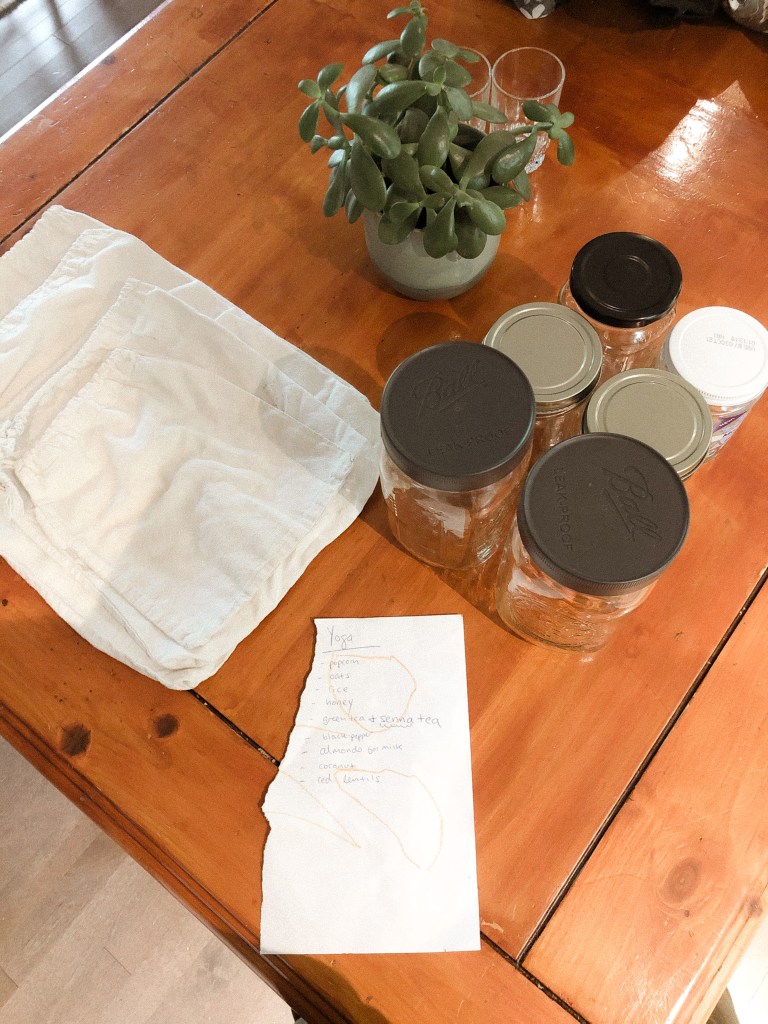
Prep your list and reusable bags the evening before
Am I the only one who can’t think straight in the morning? Between getting everyone dressed & fed, filling water bottles & packing snacks, feeding the chickens, and tending to a couple chores, getting out of the house to run errands can feel like a circus.
A little prep goes a long way to helping everything run smoothly. I pack my reusable grocery bags for Kroger (a motley assortment of gifted, thrifted, and dollar store bags) and grab my cotton bags and jars for the bulk bins. Count twice and make sure the items on the list match the number of bulk bags and/or jars. And maybe bring an extra to buy a couple bulk dates to snack on.
Look for Produce Without Packaging
This one’s pretty self-explanatory, but hear me out. Before making the switch to buying as little in plastic as possible, I’d grab a plastic bag of apples before even glancing at all the unpackaged options. Or, I’d take an unpackaged onion and put it in a plastic bag without thinking twice. Our local Kroger is pretty basic, but there are a surprising amount of unpackaged options if you switch your lens! It’s all about retraining your brain to see plastic options as a last option, not a necessity. So swap that box of spring mix for a head of romaine, or that plastic box of cherry tomatoes for some unpackaged romas. Your great grandchildren will thank you!
(The produce photo at the top is all from Misfits Market. We love buying their organic grocery store cast offs and helping stop food waste! Sometimes there’s plastic, but it would’ve been tossed into the landfill with food in it anyways, so that’s how we square that circle. A little less methane emitted into the atmosphere! And they just started stocking meat and fish!)
Be Flexible
My kids ate Trader Joe’s yogurt and frozen wild blueberries from the time they were 8 months old till around 3 years. It was our morning routine and the reason I didn’t have to jump out of bed and make a hot breakfast at 7am.
Could I really switch out the plastic-clad frozen blueberries and yogurt? Yes! And once I made the switch, what felt like a sacred routine ended up not being a big deal. Now, they grab a banana off the counter when they first wake up; a couple minutes later, my husband fixes them a bowl of homemade yogurt with jam or honey. My daughter also likes sprinkling in chia seeds I pick up from the bulk bins. (Check out my creamy and super easy yogurt recipe here!) The only plastic in our breakfast routine now is the little starter yogurt I use each week.
The jam in a glass jar helps with the berry fix, and I’m planning on picking some berries from local farms and doing a couple reusable freezer bags full this summer!
Try Once-A-Month Bulk Shopping
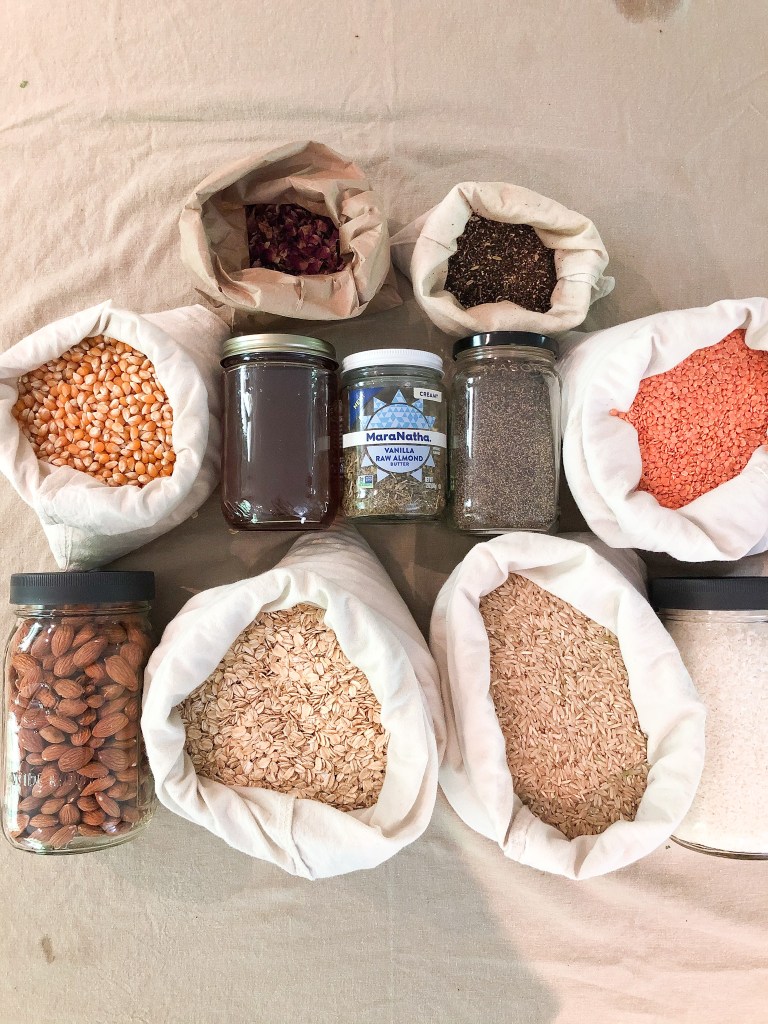
If going to two grocery stores every week doesn’t work with your schedule, try once a month to stock up on basics. That way you’re set and won’t have to choose rice in plastic when you’re in a rush. Here’s our list of basics that I make sure to get if I know it’s going to be a busy month:
- rice
- oats
- lentils
- black beans
- chickpeas
- popping corn
- coffee
- honey
- any spices we’re running low on
- chia seeds
- nutritional yeast
Choose the Biggest Package Possible
I didn’t totally understand the science of this until recently, but a 32oz block of cheese uses less plastic than two 16oz blocks. Throw back to math class and surface area! (Picture the two blocks stacked on top of each other: the two plastic layers in the middle are unnecessary in a single, larger block.)
The same thing goes for meat, grains, etc. This is one reason we buy a whole chicken most weeks instead of two packs of chicken breasts.
Meat and cheese come in plastic in America, but we can still think critically about how it’s packaged and what will result in the least waste.

Consider Eating Meat Less Often
Speaking of meat, we’ve bumped down our meat consumption to three meals a week. This feels right for us, but do what seems right for you! Some go completely plant-based, and some look to limit meat and choose more sustainably processed options. Both are great! Usually we buy a whole chicken (this makes two chicken meals + a batch of bone broth) and a pack of ground beef. This is a good move both for budget and for the environment. Eating a little less meat also allows us to choose meat that is organic and maybe had a better quality of life before being processed.
Buying Packaged? Prioritize Glass and Aluminum
Unlike plastic, both of these materials are endlessly recyclable. Plastic looses that ability after 2 go-rounds. They also won’t break down into micro-plastics that pollute our world’s water.
Paper is also a good option as it can be recycled around 6 times and then composted back into soil. We buy sugar and flour in paper then rip open the bag and give it a good shake outside before recycling.
I hope these help! Once you switch your lens, it really gets easier to shop low waste in a normal grocery store. Supplementing with bulk items from a bulk shop or using a low waste grocery delivery service like Misfits Market are great too. But if they’re not available in your area, sustainable swaps are still possible!

 The Sustainable Hearth
Planning and prep makes everything easier!
LikeLike
I totally agree, Dorothy!
LikeLiked by 1 person